When Jenna noticed browned patches creeping across her small suburban front lawn after a heatwave, she wasn’t sure if the problem was drought, disease, or simply bad timing. Her neighbor’s grass looked fine despite daily sprinkling, and Jenna wondered whether watering more often would help or only waste water. This guide helps homeowners like Jenna match the right watering frequency and setup to common yard conditions so you get healthy turf without overdoing it.
Understand the core watering challenge: shallow vs. deep roots
Problem: Lots of homeowners water thin layers of soil every day. That keeps grass shallow-rooted and sensitive to drought. For example, a typical cool-season turf needs about 1 to 1.25 inches of water per week during the growing season; split into very shallow daily mistings, the effective root depth seldom increases.
Solution: Water deeply and infrequently to encourage roots to grow downward. Aim for saturating the root zone to 4–6 inches for most turf types. That usually means applying roughly 0.5 to 0.75 inches per session, two times a week in many climates — but soil type, slope, and grass species change that. Clay holds moisture longer, so once-per-week deep watering may suffice; sandy soils drain quickly and can need three shorter sessions per week.
Practical setup match
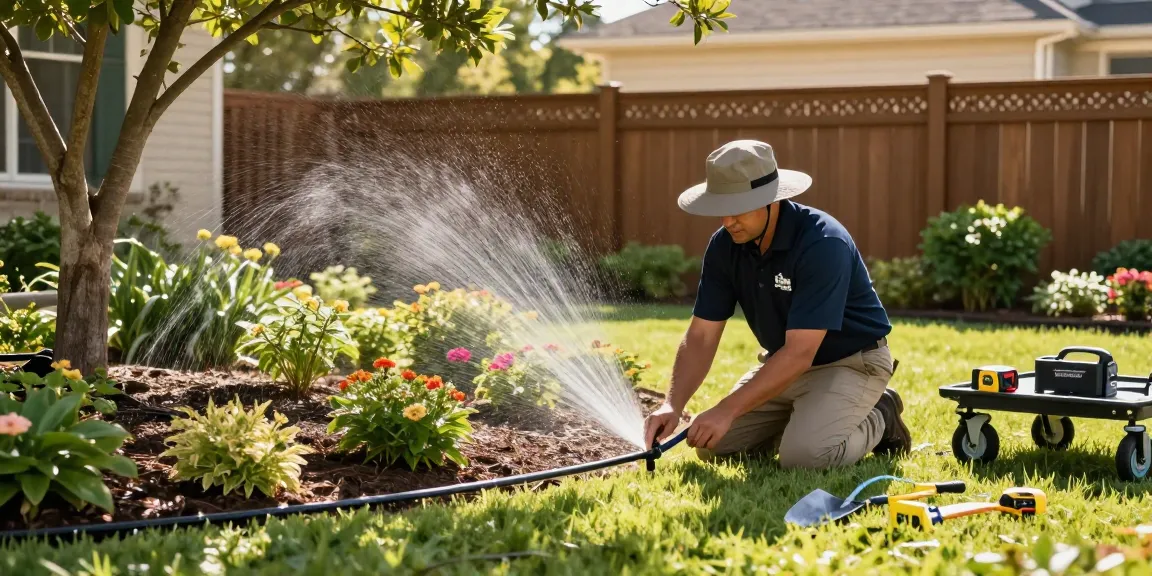
- Small lawns (like Jenna’s townhouse front): a DIY mobile sprinkler or oscillating sprinkler on a timer lets you deliver measured runs and avoid overlapping.
- Large lawns: consider a smart in-ground system that controls zone run-times for different soil or shade conditions.
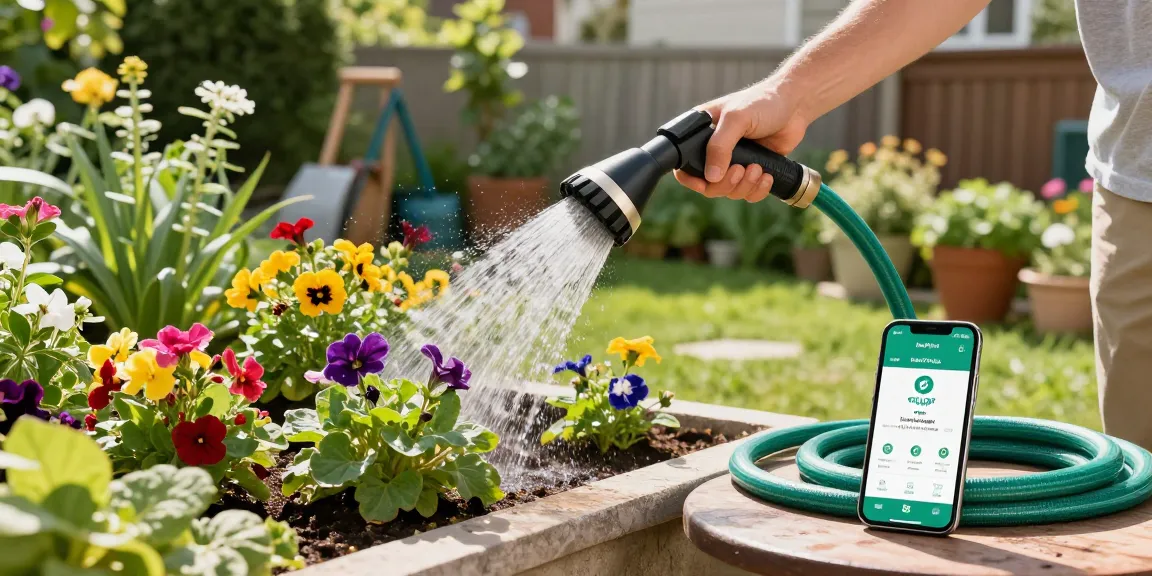
For those wanting the watering pattern automated, a WiFi timer from RainPoint can handle a deep-and-infrequent schedule, adjusting runs after rain or heat spikes.
Figure out your lawn’s water needs with simple tests
Problem: Many homeowners don’t know their soil’s infiltration rate or actual weekly water requirement, so they over- or under-water. A quick test gives a reliable baseline.
Solution: Use the cylinder (tuna-can) test and a screwdriver probe to measure how much water your sprinklers put out and how deep current watering reaches.
- Place three empty cans across a sprinkler pattern, run the sprinkler for 15 minutes, and measure the water depth in each can. Multiply by four to get inches per hour.
- After watering, push a screwdriver into the soil to estimate moisture depth. If it passes 4–6 inches easily, you hit the root zone; if not, increase duration or frequency.
- For a weekly target, shoot for about 1 to 1.25 inches total water (split across sessions). Adjust for temperature and rainfall.
An example: if your sprinkler delivers 0.25 inches in 15 minutes, a 30-minute run gives 0.5 inches — a good single session in a twice-weekly plan for many yards.
Match the right irrigation setup to common lawn problems
Problem: One-size-fits-all irrigation leads to wasted water in shady corners and under-watered sunny zones. Different yard areas need different delivery methods.
Solution: Pair turf needs with the appropriate watering system. Below are common situations and recommended setups that a homeowner can install or adjust.
Scenarios and solutions
SituationChallengeRecommended SetupSmall, uniform lawnEasy to water evenly, but risk of over-sprayPortable sprinkler on a timer; short runs 2×/weekLarge, varied lawnDifferent sun/shade zonesSmart in-ground zones with schedule adjustmentsSandy soilQuick drainageShorter, more frequent sessions (3×/week)Clay soilSlow infiltrationCycle-and-soak runs to avoid runoff
For a homeowner with a big, mixed yard—sunny south slope and shady north lawn—a smart irrigation controller will run the slope zone earlier and longer and the shady zone less often. If you want to see how to break long runs into soak cycles to prevent runoff and improve absorption, learn how often to water your lawn for best results provides step-by-step cycle-and-soak examples tailored to soil type.
When to water during the day and how weather changes frequency
Problem: Watering at midday increases evaporation; watering after dusk can invite disease. Homeowners often stick to a fixed schedule regardless of rain or heat.
Solution: Water early in the morning, ideally between 4 a.m. and 9 a.m., when winds are low and temperatures are cool. That reduces evaporation and lets grass dry enough before nighttime to limit fungal issues. During cool-season dormancy, reduce frequency but give occasional deep waterings during prolonged dry periods.
Adjust frequency seasonally and after storms. According to the EPA, smart controllers can cut outdoor water use by about 15–30% compared with conventional controllers; in practical terms that’s thousands of gallons saved annually for a typical household (source: EPA WaterSense). If a heatwave raises evapotranspiration, add an extra session that week rather than switching to daily watering.
Real examples
- Hot, dry July in Kansas: warm-season lawns may need 1–1.25 inches per week split into two runs; increase to three if the soil is sandy.
- Cool spring with showers in Oregon: skip scheduled runs after measured rainfall; soil probe showing moisture to 3 inches means you can pause watering for a week.
Using a weather-responsive WiFi timer or smart controller helps take the guesswork out of these adjustments—less time fiddling with dials, more consistent outcomes.
Signs you’ve got the frequency right — and how to fix common mistakes
Problem: Lawns may show wilt, footprints that don’t bounce back, or soggy patches. Those are cues of under- or over-watering, but many homeowners misinterpret them.
Solution: Watch for clear indicators and match them with the right fix.
- Footprints that remain: soil is dry below; increase depth per session rather than daily light sprays.
- Yellowing or mushy turf: likely overwatering; reduce frequency and check for poor drainage or compaction.
- Patches of rapid thatch or fungal spots: cut back night watering and improve drainage; consider aeration in the fall.
A quick test: after watering, roll back a small area of turf and inspect the soil color and moisture at 2–4 inches. If the top is wet but lower soil is dry, you need longer runs or cycle-and-soak to push moisture deeper. If it’s wet at depth and soggy, shorten or skip the next cycle. For homeowners who want automatic adjustments that respond to rainfall and temperature, a well-set smart controller from RainPoint can reduce mistakes by suspending cycles during wet periods and shortening runs during cool weather.
Need a reference to design a watering schedule for your specific climate? The university extension or EPA guidelines are great starting points for regional figures and evapotranspiration data (see EPA WaterSense for general savings estimates). For hands-on cycle-and-soak instructions tailored to soil type and slope, remember to learn how often to water your lawn for best results as you build your plan.