Retail robots are moving toward jobs that can be measured in aisles, shelves, orders, and minutes. The useful question for a store manager is not which machine looks most advanced, but which task it can repeat without adding work for staff.
- Shelf robots must find missing stock without blocking shoppers.
- Fulfillment robots need a clear handoff between storage and staff.
- The proof is in uptime, exception rates, and total cost.
Shelf scanning that leads to a useful action
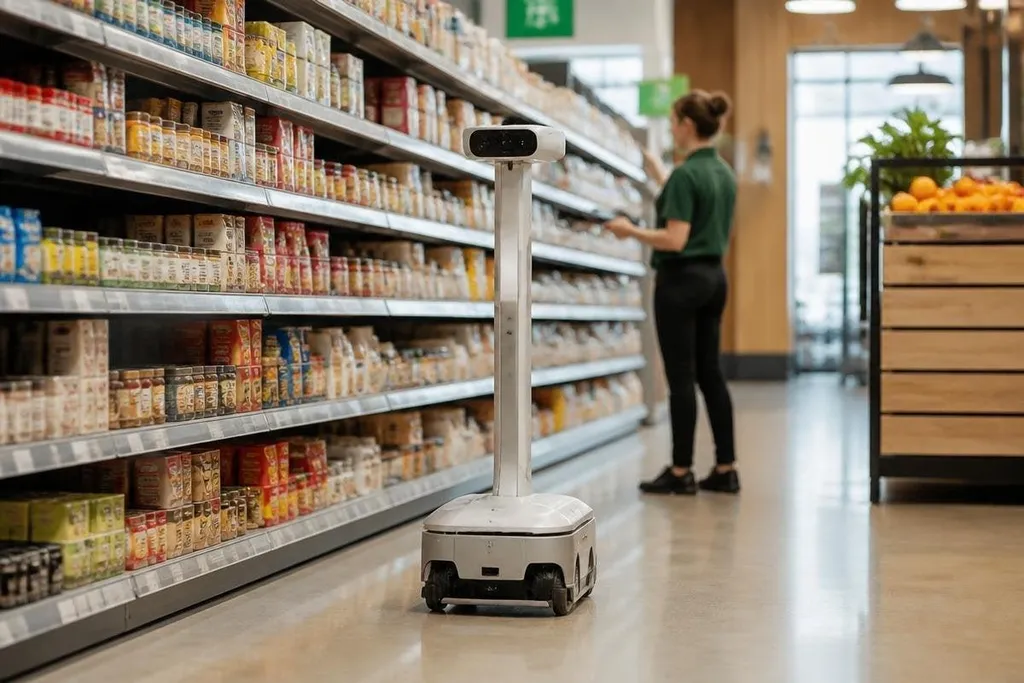
A shelf-scanning robot can use cameras, LiDAR, or both to check product locations and stock levels. The scan matters only when the result reaches the person who can fix the shelf, update the inventory record, or order more stock.
The next step is better error handling. A camera may see a product label but miss an item hidden behind another box. A useful system should mark uncertain readings for staff review instead of sending every result into the inventory system as fact.
For a store manager, the test is easy to state: how many shelves did the robot check, how many errors did staff correct, and how long did the review take? Those figures tell you more than a video of a robot moving through an aisle.
Robots that move goods inside the store
Retail sites contain stockrooms, sales floors, lifts, narrow doors, and people who do not follow fixed routes. An autonomous mobile robot needs maps, obstacle detection, safe stopping, and a clear way to ask for help when a path stays blocked.
The handoff creates another test. A robot may carry a tote from a stockroom to a pickup point, but someone still needs to load it, check the order, and return the container. The full task includes every step, so a machine that moves quickly can still leave staff with more work.
That handoff shapes retail picking too: a robot may find an item, but a worker may still verify the barcode and place it in the right carton. Reports from Robot 24 can tie claims about faster picking to the machine, order type, and human work left after the scan. The next test is whether new software can handle the odd items that slow down a real shelf.
Smarter picking and packing
Picking robots face a harder problem than moving a fixed box. Retail goods vary in size, shape, weight, packaging, and placement. A gripper that handles a carton may fail on a soft bag or a thin item in a crowded bin.
The useful change to watch is better recovery after a failed pick. The robot should detect a missed grip, choose another approach, and send the item to a person when the task stays uncertain. That can reduce repeated stops, but the result needs a record of successful picks and human interventions.
Packing brings a similar issue. A robot may place items into a box, yet staff may still need to check damage, add documents, or close the package. The measure is the complete order cycle, not the fastest single arm movement.
Checkout, cleaning, and customer contact
Customer-facing robots have a narrow path to prove their value. A checkout system must work around queues, payment errors, age checks, and customers who need help. A cleaning robot must handle changing floor conditions and keep clear of shoppers, carts, and displays.
These systems also need a safe fallback. A staff member should know when a robot has stopped, what caused the stop, and which action will clear it. If the answer requires a specialist for every small fault, the store may gain a machine and lose time.
The open question is trust. Customers may accept a robot that quietly completes a task, but a machine that blocks an aisle or gives unclear instructions creates work for the people nearby.
A buying checklist for retail robots
Before a pilot, check these points with the supplier and the store team:
- Name the task: Write the exact job, such as shelf scanning or tote delivery, and list the steps around it.
- Set the measure: Record completed tasks, stopped tasks, staff interventions, and minutes per task.
- Test the bad cases: Include blocked routes, poor lighting, mixed packaging, empty shelves, and network loss.
- Count the people: Note who loads, unloads, checks, cleans, resets, and repairs the robot.
- Price the full run: Include installation, software, training, service visits, batteries, and changes to the store.
- Set the exit rule: Decide the result that ends the pilot, extends it, or sends the robot back.
I'd skip any retail robot whose demo shows motion but gives no task result, error count, or staffing effect.
The strongest systems to watch will connect sensing, movement, and staff workflows without hiding the failed cases. Ask for those records before you ask how many robots the store can buy.